Structural Guide: How to Avoid Foundation Settling Issues Long-Term
Preventing structural instability requires an understanding of how buildings interact with underlying soil over time. Every structure exerts downward pressure on the earth, which responds by compacting, shifting, or swelling depending on moisture content and soil composition. When these movements occur unevenly across a building footprint, structural distortion begins. Managing this interaction early prevents costly remediation work in the future.
The movement of subgrade soils stems from several environmental and mechanical forces. Variations in local water tables, seasonal weather changes, site prep choices, and tree root networks all influence soil density under concrete slabs or footings. Addressing these elements individually rarely provides complete protection against structural movement. Comprehensive long-term protection demands an integrated strategy combining geotechnical evaluation, controlled drainage systems, and sound structural engineering.
Achieving lasting foundation stability requires a long-term strategy rather than temporary post-construction fixes. Quick fixes like patching drywall cracks or filling concrete gaps mask underlying issues while failing to address differential soil displacement. Property owners, builders, and engineers can preserve structural integrity by focusing on soil mechanics, water management, and footing design from the start.
Understanding “How to Avoid Foundation Settling Issues”
The Multi-Perspective Structural Reality
Structural engineers approach foundation performance through load distributions, soil bearing capacities, and settlement limits. Soil scientists focus on clay mineralogy, plasticity indices, and moisture retention profiles within distinct subgrade layers.
Excavation contractors evaluate compaction efforts, lift thicknesses, and moisture levels during site preparation. Combining these technical viewpoints ensures structural designs adapt to real-world ground conditions.
Differentiating Uniform and Differential Movement
Every foundation experiences some degree of uniform settlement as new structural weight compresses underlying soil layers. Uniform settlement causes an entire building to sink evenly by small fractions of an inch, rarely resulting in major framing or wall damage.
Differential settlement occurs when one portion of a structure settles faster or deeper than adjacent areas. This uneven movement generates strong shearing forces, racking door frames, fracturing concrete slabs, and stressing structural timber walls.
Common Oversimplifications
Property owners often blame foundation movement entirely on poor concrete work or inadequate steel rebar installation. Standard concrete resists compression forces well, but it cannot bridge wide voids created by shifting subgrade soils.
Similarly, adding excess surface water near perimeter footings to combat dry soil can soften local bearing soils, worsening differential movement instead of stabilizing the structure.
Deep Contextual Background
Historical Evolution of Foundation Design
Early construction reliance on simple stone footings placed directly on topsoil left buildings vulnerable to frost action and moisture shifts. As urban density grew during the nineteenth century, deeper masonry footings became common, though builders lacked modern soil mechanics principles.
The early twentieth century introduced scientific geotechnical testing, establishing direct links between soil plasticity, compaction density, and long-term structural load capacity.
Modern Structural Challenges
Modern residential and commercial construction often extends onto marginal land, such as reclaimed wetlands, expansive clay zones, and steep hillside cuts. These complex sites require advanced engineering methods to manage subgrade movement risks.
At the same time, shifting regional weather patterns alter ground moisture cycles, testing traditional foundation designs. Learning how to avoid foundation settling issues now requires evaluating both immediate soil parameters and long-term environmental factors.
Conceptual Frameworks and Mental Models
The Hydrological Balance Model
The Hydrological Balance Model treats subgrade soil beneath a foundation as an ecosystem sensitive to moisture swings. Desiccation causes clay soils to shrink away from footings, removing vertical support.
Excess water saturates the soil matrix, reducing shear strength and allowing structural loads to sink into softened subgrade layers. Maintaining stable moisture levels around the entire foundation perimeter prevents extreme shrink-swell cycles.
The Load-Path Distribution Chain
This framework traces structural weight down from roof rafters, through exterior framing, to the concrete footing, and finally into load-bearing soil strata.
If any link in this chain rests on unstable soil, the entire structural path experiences stress. Distributing loads over wider footing areas lowers soil contact pressure, preventing settlement in weak subgrade layers.
The Soil-Structure Interaction Spectrum
Foundations exist on a structural spectrum ranging from flexible systems to rigid masses. Flexible foundations, like light timber post-and-pier setups, yield to minor ground movement without immediate structural failure.
Rigid structures, such as post-tensioned slabs or deep basement walls, resist soil forces directly. Matching building rigidity to local soil profiles reduces structural cracking risks over time.
Key Categories of Foundation Risk and Mitigation
Expansive Clay Soil Management
Expansive clays contain minerals that swell when wet and shrink when dry. Buildings constructed on these soils experience strong upward uplift during wet periods and downward settling during dry seasons.
Replacing expansive clay near footings with engineered non-expansive fill limits soil volume changes around the foundation.
Soil Compaction Protocols
Proper site grading requires placing fill soil in thin lifts and compacting each layer with mechanical equipment. Inadequate compaction leaves internal voids that consolidate under future structural weight, leading to sudden settlement.
Verifying compaction levels with nuclear density gauges during construction prevents subgrade consolidation.
Perimeter Water Mitigation
Managing surface runoff prevents localized saturation around foundation footings. Installing wide apron slopes, extended gutter downspouts, and deep French drains routes rainwater away from building perimeters.
Keeping soil moisture consistent around the foundation limits differential soil expansion and settling.
Structural Retrofit Logic
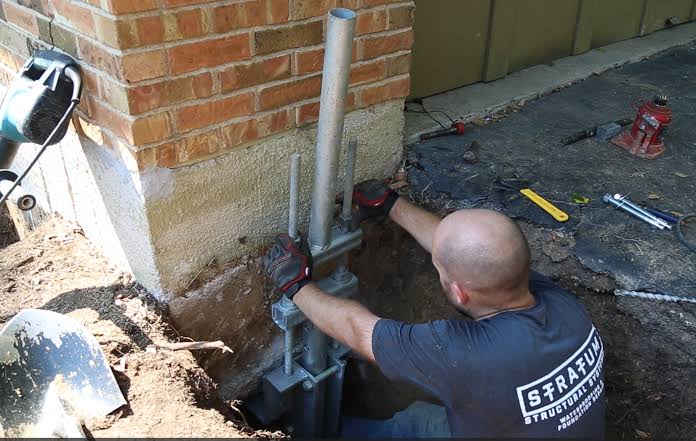
Choosing between shallow footings, post-tensioned slabs, or deep pier systems depends on site soil conditions, building weight, and project budgets. Deep pier systems cost more upfront but provide reliable support by anchoring directly into stable bedrock or deep dense soil strata.
Detailed Real-World Scenarios
Scenario A: Residential Development on Expansive Clay
A single-family home site features heavy montmorillonite clay soils subject to extreme seasonal weather shifts. The initial build used standard shallow footings without deep soil replacement or moisture control systems.
Root Causes and Subgrade Failures
-
Shallow footings were set above the seasonal soil moisture fluctuation zone.
-
Roof gutter downspouts discharged water directly against the front foundation wall.
-
Large hardwood trees planted near rear footings drew moisture out of the clay during summer months.
Engineering Adjustments
-
Install deep root barriers along the rear elevation to limit tree-driven soil drying.
-
Extend downspout discharge lines 10 feet away from foundation perimeters into pop-up emitters.
-
Enclose the perimeter footing with an underground moisture barrier to keep subgrade hydration stable.
Scenario B: Hillside Residential Addition
A two-story addition was built on a sloping hillside over uncompacted native fill soil. Within three years, diagonal drywall cracks opened along the junction between the original home and the new structure.
Root Causes and Subgrade Failures
-
Fill material was placed on the slope without proper step-trenching or mechanical compaction.
-
Surface runoff from uphill areas ponded along the upper foundation wall, softening the fill matrix.
-
The original foundation rested on dense bedrock, while the addition rested on loose soil, causing differential settlement.
Engineering Adjustments
-
Underpin the addition’s footings with steel push piers driven down to solid bedrock strata.
-
Construct an uphill swale system to divert surface runoff away from structural elements.
-
Install flexible expansion joints along wall transitions to accommodate minor residual movement.
Planning, Cost, and Resource Dynamics
Preventing foundation issues during initial construction costs far less than performing structural repairs after damage occurs. Subgrade site prep and proper drainage require modest upfront investments compared to deep pier underpinning.
Remediation expenses increase rapidly when structural settlement damages interior finishes, plumbing lines, and roof framing assemblies. Early site evaluations protect overall project budgets from unexpected structural repairs.
Tools, Strategies, and Support Systems
Essential Site Prep Strategies
-
Geotechnical Boring Tests: Core samples evaluate subgrade soil layers, water tables, and bearing capacity limits.
-
Controlled Lift Compaction: Compacting soil in thin layers ensures uniform density throughout the subgrade footprint.
-
Controlled Slope Grading: Grading ground away from foundation walls prevents surface water from pooling near footings.
Administrative Controls
Detailed site preparation logs, compaction test certificates, and soil reports document baseline structural conditions. Keeping precise engineering records helps verify code compliance and simplifies future property assessments.
Risk Landscape and Failure Modes
Understanding common soil and structural risks helps property owners avoid compounding foundation settlement problems.
Physical Failure Risks
-
Under-Footing Soil Erosion: Leaking underground water lines wash away fine subgrade soils, leaving dangerous voids under footings.
-
Vegetation Transpiration Shrinkage: Large tree roots extract deep soil moisture during summer, causing localized settlement.
-
Frost Heave Lift: Shallow footings placed above local frost lines experience cyclic freezing lift and spring settling.
Administrative Risks
-
Skipping Geotechnical Surveys: Building without professional soil reports risks placing heavy structures on weak subgrade layers.
-
Inadequate Utility Trench Backfilling: Uncompacted utility trenches near footings permit water pooling and localized settlement.
-
Ignoring Surface Drainage Maintenance: Neglecting clogged perimeter drains allows standing water to soften supporting soils over time.
Governance, Maintenance, and Long-Term Adaptation
Preventive Maintenance Schedule
Regular inspections help maintain stable subgrade conditions and catch early signs of structural movement before major damage occurs.
-
Bi-Annual Perimeter Inspections: Check ground slopes along foundation walls to ensure water drains away from the building.
-
Quarterly Drainage Checks: Clean gutters, clear downspouts, and inspect French drain outlets to keep discharge paths clear.
-
Annual Structural Assessments: Inspect basement walls, crawl spaces, and exterior masonry for new cracking patterns.
Measurement, Tracking, and Evaluation
Key Monitoring Metrics
Tracking structural and environmental metrics helps catch subgrade changes before they cause severe foundation settlement.
Common Misconceptions and Oversimplifications
Misconception 1: “Adding Rebar Prevents All Foundation Settlement”
Rebar increases concrete tensile strength, helping control crack width when stress occurs. However, steel rebar cannot prevent underlying soil from settling or consolidating under heavy loads. Proper soil preparation remains essential for structural support.
Misconception 2: “Watering Foundations Daily Prevents Clay Shrinkage”
Soaking surface soil around a foundation with hoses often creates uneven hydration levels. Uneven watering causes localized soil expansion, creating differential movement stress along footings.
Misconception 3: “Foundation Cracks Always Mean Structural Failure”
Hairline concrete shrinkage cracks often form naturally as new concrete cures. These non-structural curing lines differ from wide differential settlement fractures caused by subgrade soil movement.
Ethical, Practical, and Contextual Considerations
Balancing short-term budget limits with long-term structural safety requires sound engineering judgment. Omitting geotechnical testing or skipping proper soil compaction saves money initially, but it exposes future property owners to severe repair costs.
In addition, diverting perimeter runoff onto neighboring lots can destabilize adjacent foundations and violate local storm water regulations. Responsible property owners manage site water within property boundaries to protect overall neighborhood structural stability.
Conclusion
Understanding how to avoid foundation settling issues requires combining geotechnical engineering, proper site preparation, and continuous water management. Property owners who analyze subgrade conditions, maintain consistent soil moisture, and divert surface runoff protect their buildings far better than those relying on post-settlement repairs.
Investing in proactive soil preparation and sound structural design preserves foundation stability, reduces maintenance costs, and protects long-term property value against shifting ground conditions.